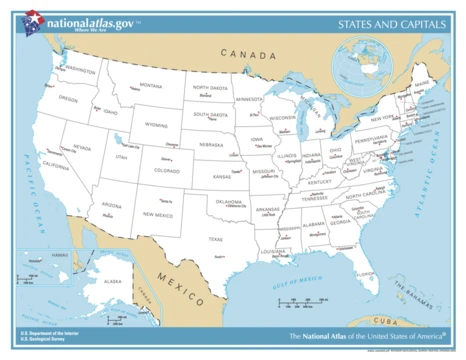
Madison, Wisconsin
Capital of Wisconsin, home to a major university and progressive politics.

via Wikipedia: Madison, Wisconsin · see source
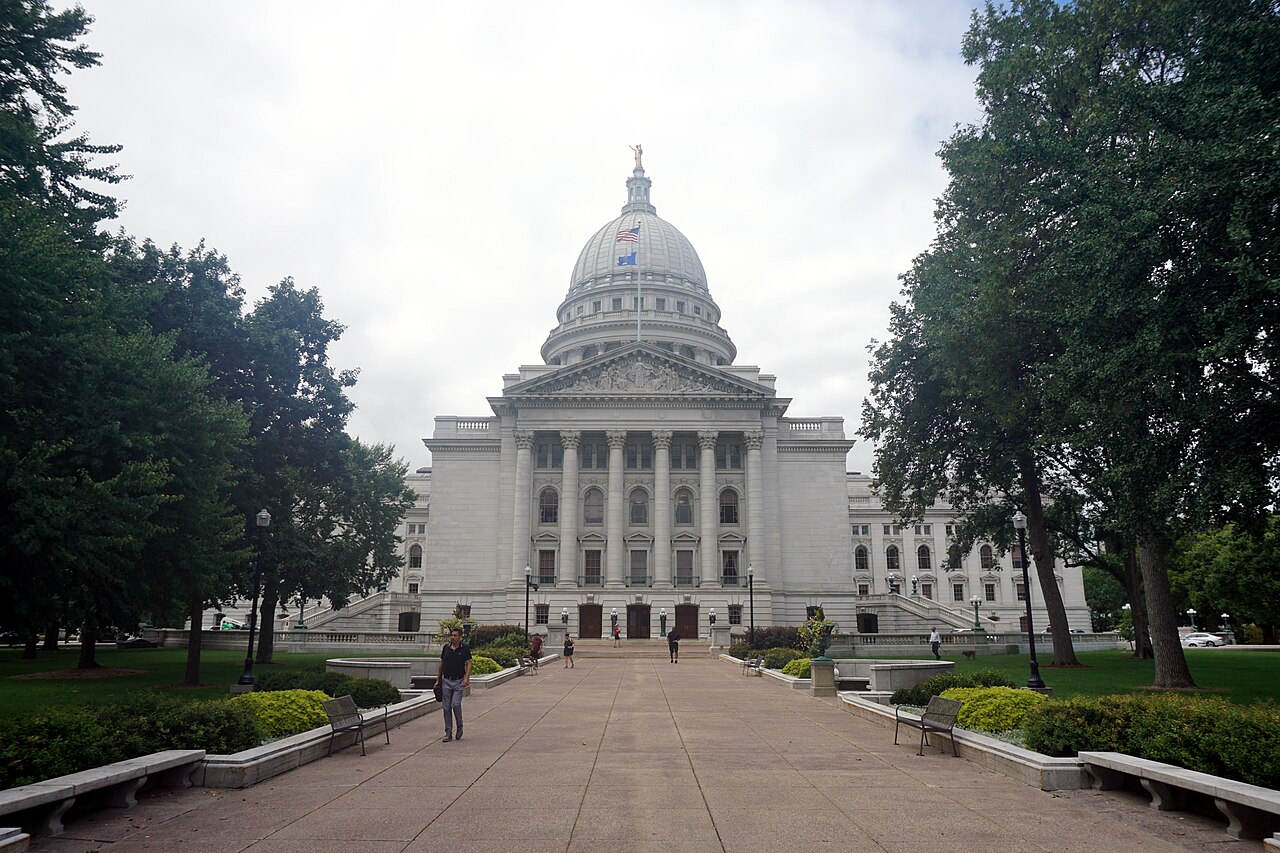
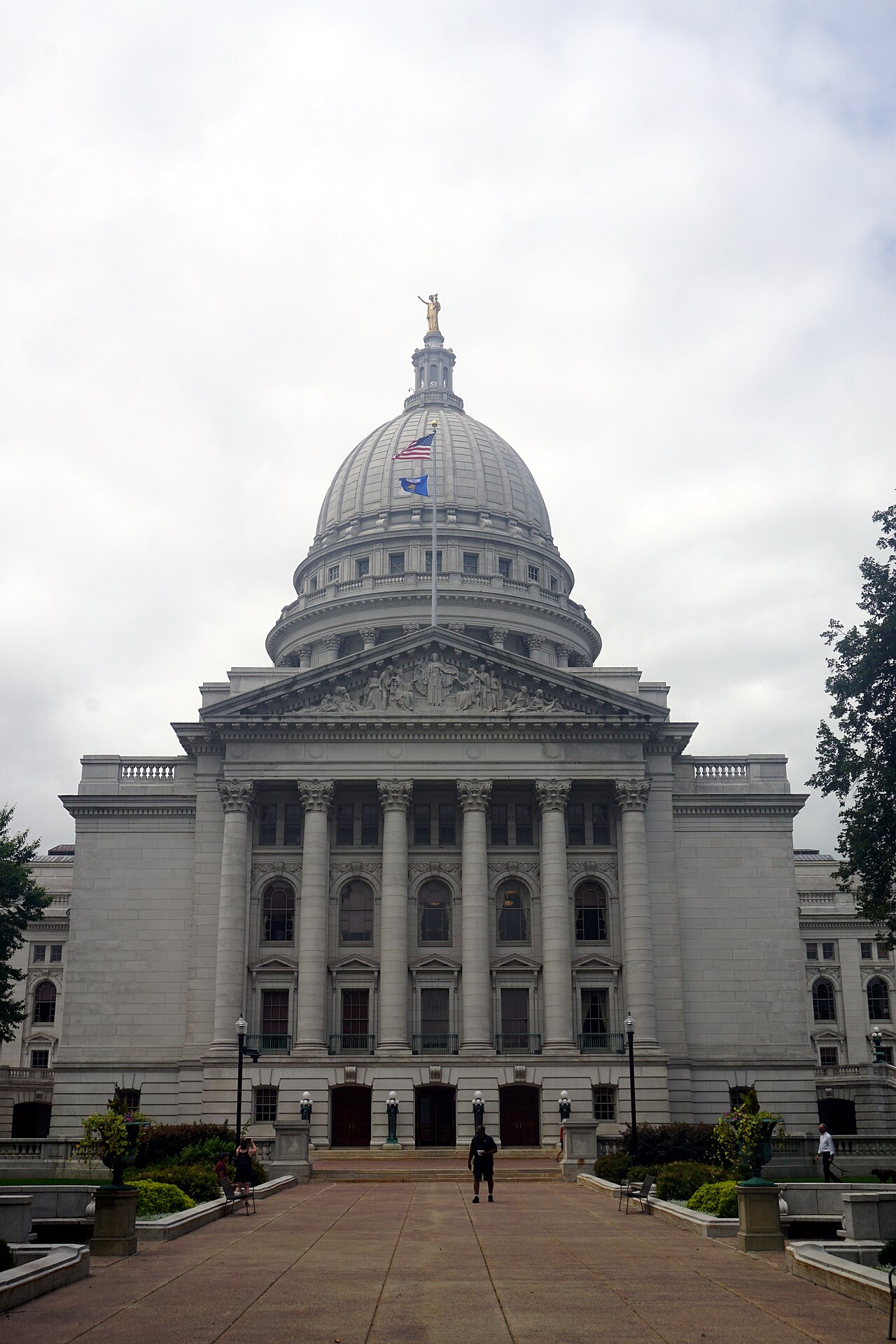
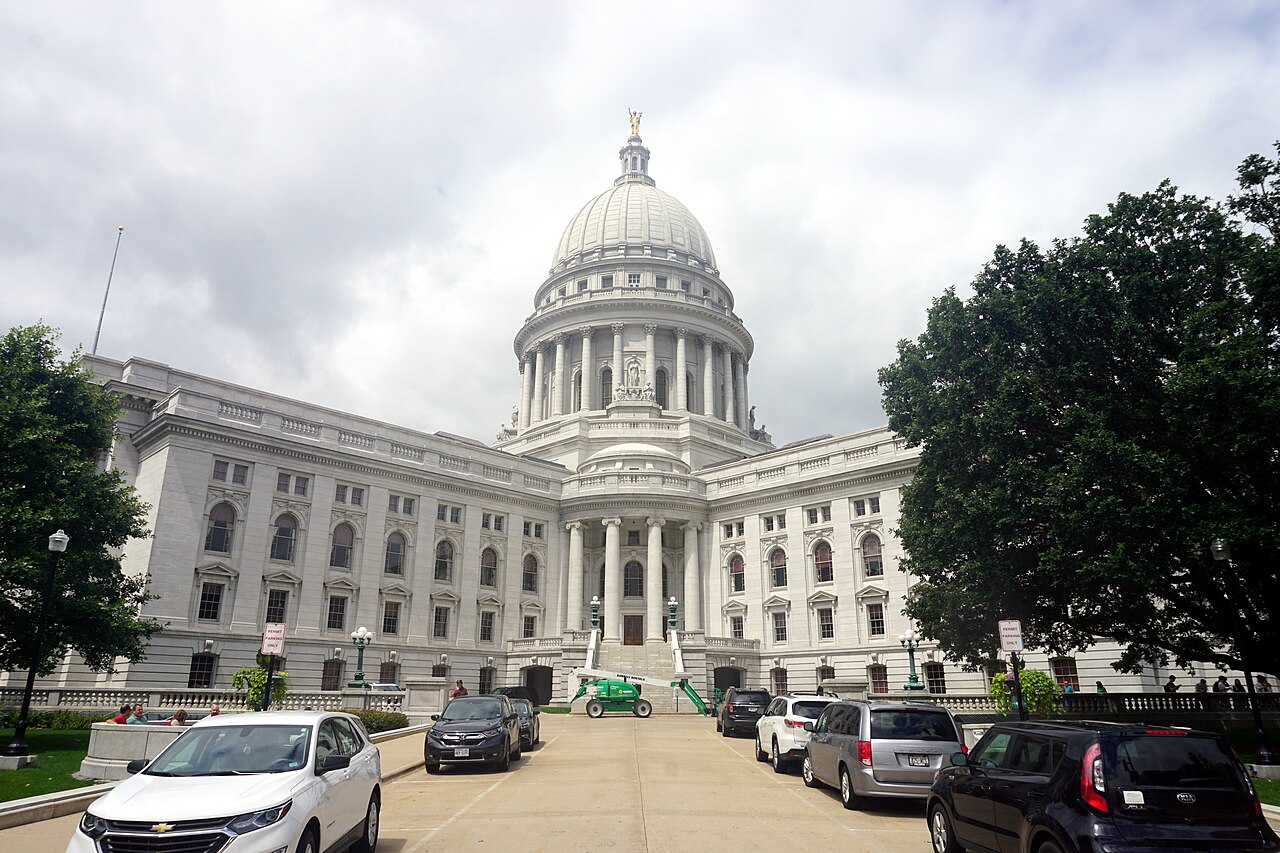
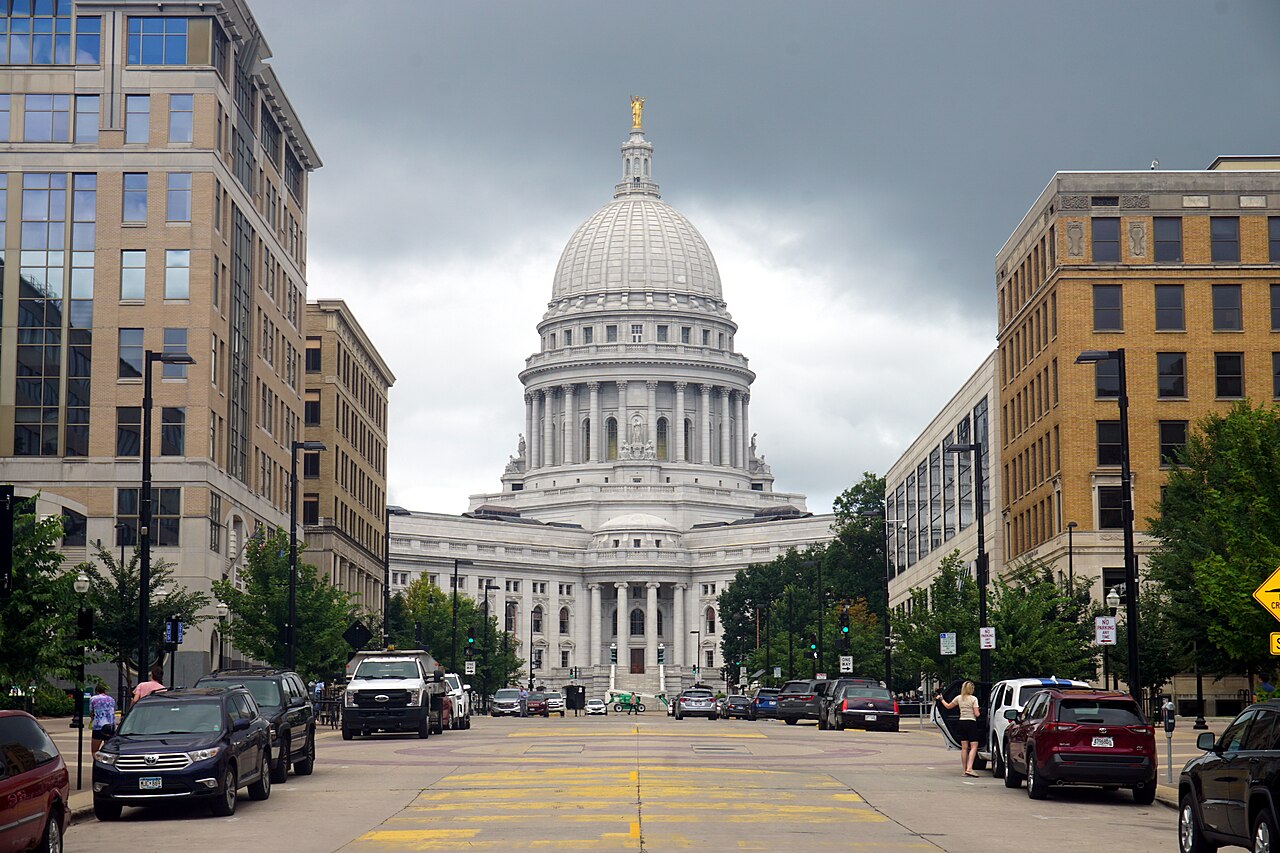
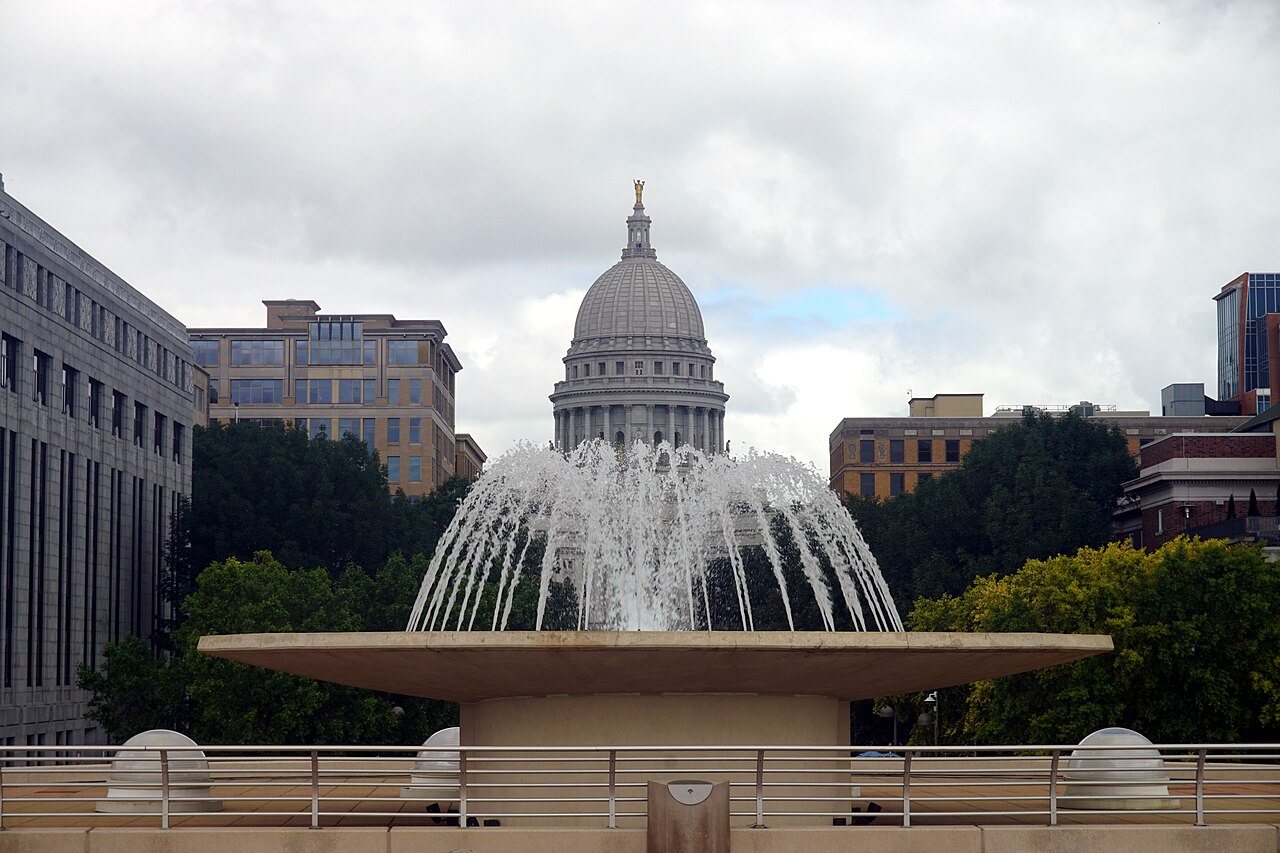
Madison is the capital of the U.S. state of Wisconsin and the second-most populous city in the state, with a population of 269,840 at the 2020 census. Founded in 1836 and named after American Founding Father and President James Madison, the city is centrally located on an isthmus between Lakes Mendota and Monona. It serves as the county seat of Dane County and is home to the Wisconsin State Capitol and the University of Wisconsin–Madison, the flagship campus of the University of Wisconsin System.
- Founded
- 1836
- Population (2020 census)
- 269,840
- Metropolitan area population (estimated)
- 708,000
- State
- Wisconsin
- County
- Dane County
- Known for
- State capital, University of Wisconsin–Madison, progressive political activity
Verified Timeline
Lore & Background
Madison's modern origins begin in 1829, when former federal judge James Duane Doty purchased over a thousand acres of swamp and forest land on the isthmus between Lakes Mendota and Monona, intending to build a city. When the Wisconsin Territory was created in 1836, Doty lobbied aggressively for Madison as the permanent capital, offering buffalo robes to freezing legislators and choice lots at discount prices. The territorial legislature voted on November 28, 1836, to make Madison its capital, largely due to its central location between Milwaukee, Prairie du Chien, lead mining regions, and Green Bay. The city was incorporated as a village in 1846 with a population of 626, and as a city in 1856 with a population of 6,863. During the Civil War, Madison served as a center of the Union Army in Wisconsin, with Camp Randall used as a training camp, military hospital, and prison camp for captured Confederate soldiers. In the 1960s and 1970s, the city became a focal point for anti-Vietnam War protests, including the 1967 Dow Chemical Company protest with 74 injured, the 1969 strike for African-American student rights that involved the Wisconsin Army National Guard, and the 1970 Sterling Hall bombing that killed researcher Robert Fassnacht. The 2011 Wisconsin protests against Act 10 drew crowds of 10,000 to over 100,000 people. In 2024, the Abundant Life Christian School shooting occurred on the city's east side, resulting in three deaths and six injuries.
Reader's Guide
Madison is significant as the political and educational hub of Wisconsin, housing the state government and the flagship University of Wisconsin campus. Its economy is shaped by major companies such as American Family Insurance, Exact Sciences Corporation, and TruStage Financial Group, as well as tourism, which generated over $1 billion in 2018. The city is known for its progressive political activity and is regarded as Wisconsin's most politically liberal city. As of 2024, it is the fastest-growing city in the state. Madison boasts one of the highest numbers of parks and playgrounds per capita among the 100 largest U.S. cities and is widely recognized as bicycle-friendly. Within the city are nine National Historic Landmarks, including several buildings designed by Frank Lloyd Wright. The city's history includes Native American habitation for about 12,000 years, with the Ho-Chunk calling the region Teejop, meaning 'land of the four lakes,' and numerous effigy mounds constructed over 1,000 years ago.
Did You Know?
- Madison was founded in 1836 and named after American Founding Father and President James Madison, who had recently died on June 28, 1836.
- The Ho-Chunk called the region Teejop, meaning 'land of the four lakes' (Mendota, Monona, Waubesa, and Kegonsa).
- The 1970 Sterling Hall bombing was intended to destroy the university's Army Mathematics Research Center but also caused massive destruction and the death of researcher Robert Fassnacht.
- Madison's downtown is centrally located on an isthmus between Lakes Mendota and Monona, giving the city its trademark 'Lake, City, Lake' geography.
- As of 2024, Madison is the fastest-growing city in the state of Wisconsin.
The Founding Gambit
In 1829, former federal judge James Duane Doty staked a bold claim on the swampy isthmus between Lakes Mendota and Monona, purchasing 1,261 acres of forest land for just $1,500 with the vision of building a city in what would become the Four Lakes region. Seven years later, when Wisconsin Territory's legislature convened in Belmont and faced the task of choosing a permanent capital, Doty threw himself into an aggressive lobbying campaign. He reportedly offered buffalo robes to shivering legislators and extended discounted land lots to undecided voters, while having surveyor James Slaughter plat not one but two competing cities—Madison and "The City of Four Lakes" near present-day Middleton. The territorial legislature ultimately voted on November 28, 1836, to make Madison its capital, drawn by its central position between the growing Milwaukee settlements to the east, the strategic post of Prairie du Chien to the west, the lead-mining regions to the southwest, and Green Bay to the northeast. Doty honored the recently deceased fourth U.S. president James Madison with the city's name, while dedicating its streets to the other thirty-eight signers of the Constitution.
Seat of Power, Engine of Growth
Madison's identity as Wisconsin's capital has shaped its civic and economic life since the first capitol cornerstone was laid in 1837. The building itself has a turbulent history: the original structure was replaced in 1863, the second capitol burned in 1904, and the current edifice was constructed between 1906 and 1917. Equally central to the city's character is the University of Wisconsin–Madison, created by an act of Governor Nelson Dewey on July 26, 1848, in fulfillment of a constitutional mandate to establish a state university near the seat of government. Its first major building, University Hall (now Bascom Hall), was completed in 1859. Today the flagship campus remains the dominant force in local demographics, culture, and the economy. The city also hosts major employers such as American Family Insurance, Exact Sciences Corporation, and TruStage Financial Group, while tourism alone generated over a billion dollars in 2018. With a 2020 population of 269,840 and a metro area of roughly 708,000, Madison ranks as the state's second-largest city behind Milwaukee and, as of 2024, its fastest-growing. Its longstanding reputation for progressive politics cements its standing as Wisconsin's most liberal urban center.
Twelve Thousand Years of Inhabitation
Long before any European settler set foot on the isthmus, the lakes and prairies surrounding what is now Madison had been home to human communities for roughly twelve thousand years. The Ho-Chunk people, who called the region Teejop—a name translating to "land of the four lakes" referring to Mendota, Monona, Waubesa, and Kegonsa—left behind a landscape rich with cultural markers. Effigy mounds, raised for ceremonial and burial purposes more than a millennium before European contact, once dotted the fertile prairies encircling the lakes. In more recent decades, the discovery of dugout canoes near numerous small lakes and rivers in the area has sparked fresh anthropological research, deepening understanding of how these early communities navigated and utilized the waterways. The Ho-Chunk name and the physical geography it describes remain woven into the city's identity: Madison's downtown still sits on that same narrow strip of land between Mendota and Monona, and the broader metropolitan area encompasses Lake Wingra as well. The region's layered past—spanning ancient mound-building cultures through Ho-Chunk stewardship to Doty's speculative land purchase—gives Madison a depth of human history that few American cities of its size can claim.
Green Streets, Historic Corners, and a Counterculture Legacy
Madison's modern cultural landscape reflects a city that prizes both its architectural heritage and its commitment to outdoor, active living. It boasts one of the highest concentrations of parks and playgrounds per capita among the one hundred largest U.S. cities and is widely recognized as a bicycle-friendly community. Within its borders sit nine National Historic Landmarks, several of them designed by Frank Lloyd Wright, alongside institutions like the Chazen Museum of Art, Henry Vilas Zoo, Olbrich Botanical Gardens, and the Overture Center for the Arts. The city's counterculture roots run deep: in the 1960s and 1970s, the neighborhood around Mifflin and Bassett streets—affectionately dubbed "Miffland"—became a hub where students and young artists lived in three-story apartments, painted murals, and ran the cooperative Mifflin Street Co-op grocery store. Tensions with city authorities, particularly under Republican mayor Bill Dyke, gave the era a charged, confrontational edge. Even the Civil War left its imprint: Union Corners, where a tavern served as the last stop for soldiers heading to fight the Confederacy, and Camp Randall, a training ground, hospital, and Confederate prisoner camp whose site was later absorbed into the university and became home to Camp Randall Stadium in 1917.
Gallery

Frequently Asked Questions
What is Madison, Wisconsin?
Madison is the capital city of Wisconsin and the state's second-largest city by population. It sits on a narrow strip of land between Lakes Mendota and Monona and serves as the county seat of Dane County.
What is Madison, Wisconsin's role in state government?
As the seat of Wisconsin's executive and legislative branches, Madison is where the State Capitol houses the governor's office and the state legislature. All major state-level policymaking and judicial administration radiate out from this central location.
How did Madison, Wisconsin get its name and when was it established?
The city was laid out in 1836 and named for James Madison, the fourth president and a principal author of the U.S. Constitution. Its central position on the isthmus between two lakes made it a practical pick for a new state capital.
Why is Madison, Wisconsin important beyond its role as a capital?
The University of Wisconsin–Madison, the flagship campus of the state's university system, anchors the city as a major research and academic hub. Madison is also widely recognized for its progressive political culture and high level of civic participation.
How large is Madison, Wisconsin?
The 2020 census counted 269,840 residents within the city limits. The surrounding metropolitan area is estimated at roughly 708,000 people, making it one of the more densely populated regions in the upper Midwest.
More in American State Capitals 1-18
Spotted an error? Know more?
This is a living reference — every entry is fact-audited, and reader corrections feed straight into our audit queue. Suggest an edit · See this site's audit record