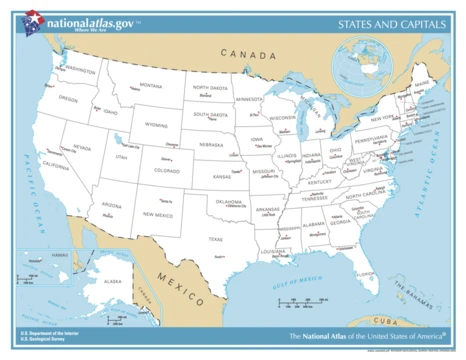
Lincoln, Nebraska
Capital of Nebraska, founded as Lancaster in 1856.

via Wikipedia: Lincoln, Nebraska · see source
Lincoln is the capital city of the U.S. state of Nebraska and the county seat of Lancaster County. Founded in 1856 as the village of Lancaster, it was renamed after President Abraham Lincoln and became Nebraska's state capital in 1869. As the seat of government for the state of Nebraska, the city is the economic and cultural anchor of the Lincoln, Nebraska metropolitan area, home to approximately 345,000 people. The city covers 103.9 square miles (269.1 km2) and had a population of 291,082 as of the 2020 census (301,522 estimated in 2025). It is the second-most populous city in Nebraska and the 72nd-most populous in the United States.
- Population (2020 census)
- 291,082
Verified Timeline
Lore & Background
Lincoln was founded in 1856 as the village of Lancaster on the wild salt marshes and arroyos of what became Lancaster County. The first settlers were attracted by the abundance of salt, though the commodity became unviable after J. Sterling Morton developed his salt mines in Kansas. The village became the county seat of the newly created Lancaster County in 1859. After Nebraska was granted statehood on March 1, 1867, the territorial legislature voted to move the capital south of the Platte River. Omaha Senator J. N. H. Patrick attempted to derail the move by proposing the future capital be named after recently assassinated President Abraham Lincoln, assuming senators south of the Platte—many sympathetic to the Confederate cause—would oppose it. The motion failed to block the move, and the Removal Act passed in 1867. The Capital Commission, composed of Governor David Butler, Secretary of State Thomas Kennard, and State Auditor John Gillespie, chose the village of Lancaster, with approximately 30 residents, in part due to its salt flats and marshes. Kennard platted Lincoln on a broader scale, and the plat files were finished on September 6, 1867. The first state capitol, a two-story limestone building with a central cupola, was completed on December 1, 1868. The city was incorporated as Lincoln on April 1, 1869. The city grew as a rail hub, with the Burlington and Missouri River Railroad's first train arriving on June 26, 1870, followed by the Midland Pacific (1871), the Atchison and Nebraska (1872), the Union Pacific (1877), the Chicago and North Western and Missouri Pacific (1886), and the Chicago, Rock Island and Pacific (1892). The University of Nebraska was established in Lincoln in 1869 with a land grant of about 130,000 acres; construction of University Hall began the same year. The current state capitol, designed by Bertram G. Goodhue, was constructed in four phases from 1922 to 1932 and is the nation's second-tallest capitol. Lincoln annexed several nearby towns: Normal in 1919, Bethany Heights in 1922, University Place in 1926, College View in 1929, and Havelock in 1930. Designated as a 'refugee-friendly' city by the U.S. Department of State in the 1970s, Lincoln was the 12th-largest resettlement site per capita in the country by 2000, with refugees from Vietnam, Myanmar, Sudan, Iraq, and Afghanistan resettling there.
Reader's Guide
Lincoln, Nebraska, holds significance as the state capital and a major economic and cultural anchor for the region. Its founding as Lancaster in 1856 and renaming to Lincoln in 1869 reflect a political maneuver during the post-Civil War era that ultimately failed to prevent the capital's relocation from Omaha. The city's growth was driven by its role as a rail hub—the Burlington and Missouri River Railroad arrived in 1870, and by 1892 six railroads served the city—and the establishment of the University of Nebraska in 1869, which remains the state's largest university with 23,954 students enrolled and is the city's third-largest employer. The Bertram G. Goodhue–designed state capitol, completed in 1932, is a notable architectural landmark and the second-tallest capitol building in the United States. Lincoln's designation as a 'refugee-friendly' city in the 1970s led to significant resettlement of refugees from Vietnam, Karen (Burmese ethnic minority), Sudanese, and Yazidi (Iraqi ethnic minority) people, as well as refugees from Iraq, the Middle East, and Afghanistan. By the 2025–26 school year, Lincoln Public Schools supported about 3,500 students speaking 67 languages other than English. The region makes up part of what is known as the Midwest Silicon Prairie, with a growing high-tech sector alongside service and manufacturing industries. Other primary employers include the state and U.S. governments. The city is the second-most populous in Nebraska and the 72nd-most populous in the United States.
Did You Know?
- Lincoln was founded in 1856 as the village of Lancaster on the wild salt marshes and arroyos of what became Lancaster County.
- The Nebraska State Capitol, completed in 1932, is the nation's second-tallest capitol building.
- Charles Lindbergh was a student at the Lincoln Flying School in 1922.
- By the 2025–26 school year, Lincoln Public Schools supported about 3,500 students who spoke 67 languages other than English.
- The University of Nebraska was founded in Lincoln in 1869 with a land grant of about 130,000 acres.
From Salt Marshes to Statehood: The Birth of Lincoln
Lincoln's origins stretch back to the wild salt marshes and arroyos along the east bank of Salt Creek. In 1856, Captain W. T. Donovan, a former steamer captain, and his family settled in the area, drawn by abundant salt deposits. The community, initially called Lancaster, became the county seat of newly created Lancaster County in 1859. The 1862 Homestead Act accelerated homesteading, and by the end of 1868 the village held roughly 500 residents. The city's name carries a clever political twist. When Nebraska's territorial legislature moved to relocate the capital south of the Platte River, Omaha Senator J. N. H. Patrick tried to derail the measure by proposing the new capital be named after the recently assassinated President Abraham Lincoln. He calculated that residents south of the river, many of whom had sympathized with the Confederate cause, would refuse to back a city bearing that name. The ploy failed. The Removal Act passed in 1867, and a Capital Commission selected the tiny village of Lancaster—then home to only about thirty people—for the new seat of government. The township was officially renamed Lincoln and incorporated as a city on April 1, 1869.
Three Capitals, One Landmark
Lincoln's skyline has been shaped by three successive capitol buildings, each telling a story of ambition and structural compromise. The first, completed on December 1, 1868, was a modest two-story structure built from native limestone with a central cupola. By 1888 it was deemed structurally unsound and replaced by a classical design from architect William H. Willcox. That second building, too, developed serious structural problems that by the 1920s made a full replacement unavoidable. Construction on the current capitol began in 1922, with Bertram G. Goodhue selected through a national competition to serve as architect. The first phase was finished by 1924, allowing state offices to move in, and the aging Willcox building was razed the following year. Goodhue's design was built in four phases, with the final phase completed in 1932. The result is the second-tallest capitol building in the United States. As the seat of Nebraska's government, the capitol anchors a civic ecosystem in which both the state and federal governments remain among the city's largest employers.
University Town and Silicon Prairie
The University of Nebraska, established in Lincoln in 1869 with a land grant of roughly 130,000 acres, has been central to the city's identity since its earliest days. Construction of University Hall, the first building, began that same year. Today the university stands as Nebraska's largest institution of higher education, with 23,954 students enrolled, and ranks as the city's third-largest employer. Beyond academia, Lincoln's economic landscape extends into the service and manufacturing sectors, with a notably growing high-tech component. The region is part of what is commonly called the Midwest Silicon Prairie, a nod to its expanding technology and innovation base. As the economic and cultural anchor of the Lincoln metropolitan area—home to approximately 345,000 people—the city ranks as the 72nd-most populous in the United States and the second-most populous in Nebraska. With a total area of 103.9 square miles and a 2020 census population of 291,082, rising to an estimated 301,522 by 2025, Lincoln balances its governmental and academic heritage with a forward-looking industrial profile.
A City of Many Tongues
In the 1970s, the U.S. Department of State designated Lincoln a refugee-friendly city, a commitment that has profoundly shaped its demographic fabric. By 2000, the city had become the twelfth-largest resettlement site per capita in the nation. Over the decades, refugees from Vietnam, the Karen ethnic minority from Burma, Sudan, and the Yazidi people of Iraq, along with others from across the Middle East and Afghanistan, have built new lives in the community. The linguistic diversity this has produced is remarkable. During the 2025–26 school year, Lincoln Public Schools reported supporting approximately 3,500 students who spoke 67 languages other than English at home. This multilingual reality is not an anomaly but a reflection of decades of deliberate resettlement policy and community integration. Lincoln's identity as a capital city, a university town, and a refuge for displaced peoples intertwines to create a civic culture where government, education, and humanitarianism reinforce one another.
Gallery
Frequently Asked Questions
What is Lincoln, Nebraska?
Lincoln is the capital city of the state of Nebraska and the county seat of Lancaster County. It serves as the political center of the state and anchors the broader Lincoln metropolitan region.
What role does Lincoln play in Nebraska's government?
As the state capital, Lincoln is where Nebraska's executive, legislative, and judicial functions are carried out. The governor's office, the state legislature, and the state's court system all operate from the city.
How did the city get the name 'Lincoln'?
The settlement was originally platted in 1856 under the name Lancaster. It was subsequently renamed in honor of President Abraham Lincoln and officially designated Nebraska's capital in 1867.
Why is Lincoln, Nebraska important beyond being a capital?
The city functions as the economic and cultural hub for its surrounding metropolitan area. With a population of roughly 292,000 according to the 2020 census, it drives the region's commerce, education, and arts activity.
When was Lincoln, Nebraska founded?
The community dates back to 1856, when it was established as the village of Lancaster. It formally became the state capital a decade later, in 1867.
More in American State Capitals 1-18
Spotted an error? Know more?
This is a living reference — every entry is fact-audited, and reader corrections feed straight into our audit queue. Suggest an edit · See this site's audit record