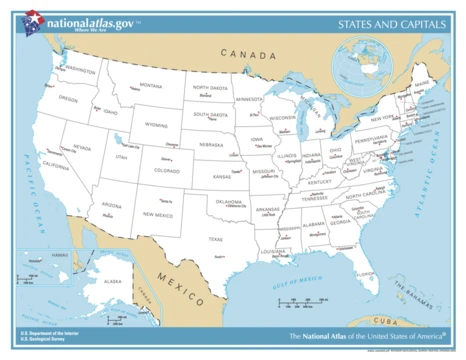
Jackson, Mississippi
Capital and most populous city of Mississippi, on the Pearl River.

via Wikipedia: Jackson, Mississippi · see source
Jackson is the capital and most populous city of the U.S. state of Mississippi. Founded in 1821 as the new state capital, it was named after General Andrew Jackson, a war hero in the Battle of New Orleans during the War of 1812 and subsequently the seventh U.S. president. The city sits on the Pearl River and is located in the greater Jackson Prairie region, serving as one of two county seats for Hinds County.
- Metro GDP (2020)
- $30 billion
Verified Timeline
Lore & Background
The Jackson area was historically populated by the Choctaw, the majority of whom were forcibly removed to Oklahoma following Andrew Jackson's signing of the Indian Removal Act in 1830. The Choctaw town that stood where Jackson is today was called Chisha Foka, meaning 'Among the post oaks.' The city's first European American settler was Louis LeFleur, a French-Canadian trader, and the village became known as LeFleur's Bluff. LeFleur's Bluff was developed when it was chosen as the site for the new state's capital city; the Mississippi General Assembly decided in 1821 that the state needed a centrally located capital, and after surveying the area, they selected LeFleur's Bluff. The Assembly passed an act on November 28, 1821, authorizing the site as the permanent seat of the government of the state of Mississippi. The city of Jackson was originally planned, in April 1822, by Peter Aaron Van Dorn in a 'checkerboard' pattern advocated by Thomas Jefferson. The state legislature first met in Jackson on December 23, 1822. In 1839, the Mississippi Legislature passed the first state law in the U.S. to permit married women to own and administer their own property.
Reader's Guide
Jackson's significance stems from its role as the political and economic center of Mississippi. During the American Civil War, despite its small population, Jackson became a strategic center of manufacturing for the Confederacy. Union forces captured Jackson twice in 1863. On May 14, 1863, Union troops under the command of William Tecumseh Sherman burned and looted key facilities in Jackson. After the fall of Vicksburg, Union forces began the siege of Jackson, which lasted for approximately one week. On July 16, 1863, Confederate forces slipped out of Jackson during the night and retreated across the Pearl River. Union forces completely burned the city after its capture this second time. The city was called 'Chimneyville' because only the chimneys of houses were left standing. The Governor's Mansion, built in 1842, served as Sherman's headquarters and has been preserved. Another is the Old Capitol building, which served as the home of the Mississippi state legislature from 1839 to 1903. The Mississippi legislature passed the ordinance of secession from the Union there on January 9, 1861, becoming the second state to secede. The Jackson City Hall, built in 1846 for less than $8,000, also survived. During Reconstruction, African Americans were granted civil rights, schools were established, and African Americans held political offices. In 1871, the city introduced mule-drawn streetcars which ran on State Street, replaced by electric ones in 1899. The city has since rebuilt and is known for its cultural contributions, particularly in blues, gospel, folk, and jazz music. The Jackson metropolitan area is the largest metropolitan area located entirely in the state and the tenth-largest urban area in the Deep South, with 592,000 residents in 2020. In 2020, the Jackson metropolitan area held a GDP of $30 billion, accounting for 29% of the state's total GDP. The city's population was 153,701 at the 2020 census, a decline of 11.42% from 173,514 since the 2010 census, representing the largest decline in population during the decade of any major U.S. city.
Did You Know?
- Jackson was originally planned in April 1822 by Peter Aaron Van Dorn in a 'checkerboard' pattern advocated by Thomas Jefferson.
- In 1839, the Mississippi Legislature passed the first state law in the U.S. to permit married women to own and administer their own property.
- After Union forces completely burned the city in 1863, it was called 'Chimneyville' because only the chimneys of houses were left standing.
- The Jackson City Hall, built in 1846 for less than $8,000, survived the Civil War; it is said that Sherman, a Mason, spared it because it housed a Masonic Lodge, though a more likely reason is that it housed an army hospital.
- In 1871, the city introduced mule-drawn streetcars which ran on State Street, replaced by electric ones in 1899.
Founding & Strategic Geography
Jackson's origins trace back to the Choctaw settlement known as Chisha Foka, meaning "Among the post oaks," situated along the historic Natchez Trace trade route. The first European American to settle the area was Louis LeFleur, a French-Canadian trader, and the site became known as LeFleur's Bluff. In 1821, the Mississippi General Assembly, seeking a centrally located capital to replace Natchez, dispatched commissioners who surveyed the region and identified the bluff along the Pearl River as ideal for its healthful surroundings, navigable waters, and proximity to the Natchez Trace. The legislature authorized the site on November 28, 1821, and the city was named in honor of General Andrew Jackson for his 1815 victory at New Orleans. Peter Aaron Van Dorn laid out the original plan in April 1822 using Jefferson's checkerboard pattern, alternating blocks with open spaces. The state legislature convened there for the first time on December 23, 1822.
Civil War & the Burning of 1863
Though modest in size, Jackson held outsized strategic importance during the Civil War as a Confederate manufacturing and railroad hub. In May 1863, Union forces captured the city in two separate engagements bracketing the fall of Vicksburg. On May 14, Union troops won the first Battle of Jackson, driving Confederate defenders northward toward Canton. Under the command of William Tecumseh Sherman, Union soldiers then burned and looted key industrial and rail facilities, effectively dismantling the city's role as a Confederate supply center. After securing Jackson, Sherman's forces turned west to engage the Vicksburg garrison at Champion Hill in nearby Edwards, launching the siege that would end the campaign. The destruction of 1863 left a lasting scar on the city's infrastructure and identity, and the subsequent reconstruction of its rail connections in the decades after the war became the engine of Jackson's long-term growth.
Culture, Music & Civic Institutions
Jackson carries the self-proclaimed motto "The City with Soul," a designation rooted in its extraordinary depth of musical and artistic heritage. The city has produced and nurtured prominent figures across blues, gospel, folk, and jazz, making it a crossroads of American sound. Its cultural infrastructure is equally rich: the Mississippi Children's Museum, the Mississippi Museum of Natural Science, the Mississippi Civil Rights Museum, the Mississippi Museum of Art, the Old Capital Museum, and the Museum of Mississippi History collectively offer a broad sweep of the state's story. Beyond the arts, the Mississippi Coliseum and the Mississippi Veterans Memorial Stadium—home field of the Jackson State Tigers football team—anchor the city's civic and athletic life. Together these institutions reinforce Jackson's identity as a place where creative expression and public memory remain central to daily life.
Economic Profile & Population Dynamics
Jackson's demographic and economic story is marked by both historic surges and recent contraction. During the 1920s, a speculative natural gas boom propelled the city past Meridian to claim the title of Mississippi's most populous city, a position it has held ever since. By the 2020 census, however, the city's population had fallen to 153,701, an 11.42 percent drop from 173,514 in 2010—the steepest ten-year decline of any major U.S. city. Yet the broader Jackson metropolitan area, with 592,000 residents, remains the largest metro located entirely within the state and ranks as the tenth-largest urban area in the Deep South. Economically, the metro generated a GDP of $30 billion in 2020, representing 29 percent of Mississippi's total output. Its position on Interstate 55 between Memphis and New Orleans, and on Interstate 20 between Dallas and Atlanta, keeps it woven into the region's commercial arteries.
Gallery
Frequently Asked Questions
What is Jackson, Mississippi?
Jackson is the capital and most populous city of the state of Mississippi, sitting along the Pearl River in the greater Jackson Prairie region. It doubles as one of two county seats for Hinds County.
Why is the city named 'Jackson'?
The name honors General Andrew Jackson, the War of 1812 hero celebrated for his victory at the Battle of New Orleans, who later went on to serve as the seventh U.S. president.
When did Jackson become Mississippi's capital?
The city was established in 1821 with the specific purpose of serving as the new state capital for the young state of Mississippi.
What is Jackson's economic footprint?
The Jackson metro area produced roughly $28.5 billion in GDP by 2020, anchoring the state's commercial activity. As the seat of state government, it also concentrates legislative, judicial, and administrative functions.
Why does Jackson, Mississippi matter to the state?
As both the political nerve center and the largest urban population in Mississippi, Jackson ties together the state's governance, economy, and cultural identity along the Pearl River.
More in American State Capitals 1-18
Spotted an error? Know more?
This is a living reference — every entry is fact-audited, and reader corrections feed straight into our audit queue. Suggest an edit · See this site's audit record