Frequently Asked Questions
The most-asked questions about american state capitals.
What does the 'American state capitals' topic actually cover?
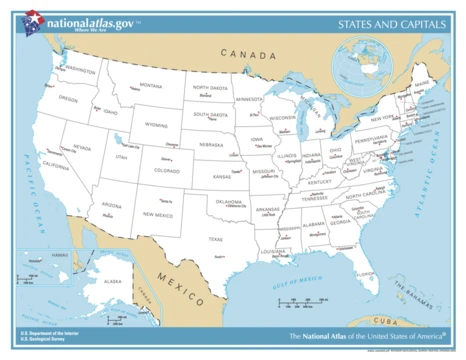
It encompasses the 50 designated government-seat cities across the United States, each housing a statehouse, governor's office, and legislative chambers. Think of it as a 50-stop tour of where state-level political power physically resides.
How many state capitals are there in total?
Exactly 50, one for each state. The District of Columbia is the federal capital but is not counted among them because it is not a state.
Is Washington, D.C. considered a state capital?
No—D.C. serves as the capital of the United States at the federal level and is not the seat of any state government. It is a common mix-up for newcomers to list it alongside the 50 state capitals.
Which state capital is the most populous?
Phoenix, Arizona, holds that title with a city population exceeding 1.6 million. It is also the largest city in its state, a distinction shared by only a handful of other capitals.
Which state capital is the smallest by population?
Dover, Delaware, is the least populous at roughly 38,000 residents. Pierre, South Dakota, sits close behind and is often mentioned in the same breath.
Which capital covers the most land area?
Juneau, Alaska, sprawls across roughly 4,700 square miles of coastal and mountainous terrain. Its population density is extremely low because the city was incorporated over a vast geographic footprint.
Why are some capitals located in smaller, less obvious cities?
Many were chosen in the 18th and 19th centuries as a political compromise between rival larger cities, or because a central location made travel to the legislature easier for rural legislators. Indianapolis (chosen over Cincinnati and Louisville) and Austin (selected over San Antonio and Houston) are classic examples.
What is a common misconception about state capitals?
A frequent one is that every capital is the biggest or most famous city in its state, but many—like Salem, Oregon, or Montpelier, Vermont—are modest in size and overshadowed by neighboring metros. Another is that all statehouses look alike, when their architecture actually ranges from Greek Revival to modernist glass.
Which state most recently changed its capital?
Oklahoma moved its seat from Guthrie to Oklahoma City in 1910, the last time any state officially relocated its capital. Prior to that, several states in the 19th century made similar shifts as populations grew.
Where should a newcomer start if they want to explore state capitals?
A good entry point is comparing the 50 statehouses side by side, since the buildings themselves reveal a lot about each state's history and identity. From there, diving into the political stories behind how each city was chosen tends to make the whole collection click into place.